In steel processing and logistics facilities, how coils are stored directly impacts safety, operational efficiency, and long-term costs. While traditional floor storage methods are still used in many facilities, steel coil stacking systems are increasingly becoming the preferred solution for modern industrial environments.
This article compares steel coil stacking systems with conventional floor storage methods, focusing on safety, space utilization, and total cost of ownership.
Understanding Traditional Floor Storage Methods
Traditional floor storage typically involves placing steel coils directly on the warehouse floor using wooden blocks, rubber supports, or improvised chocks. While this approach may seem cost-effective at first, it introduces several operational and safety challenges.
Limitations of Floor-Based Coil Storage
- Limited stacking height
- Increased risk of coil rolling
- Higher probability of surface and edge damage
- Inefficient use of warehouse space
As coil weights increase and storage volumes grow, these limitations become more pronounced.
What Are Steel Coil Stacking Systems?
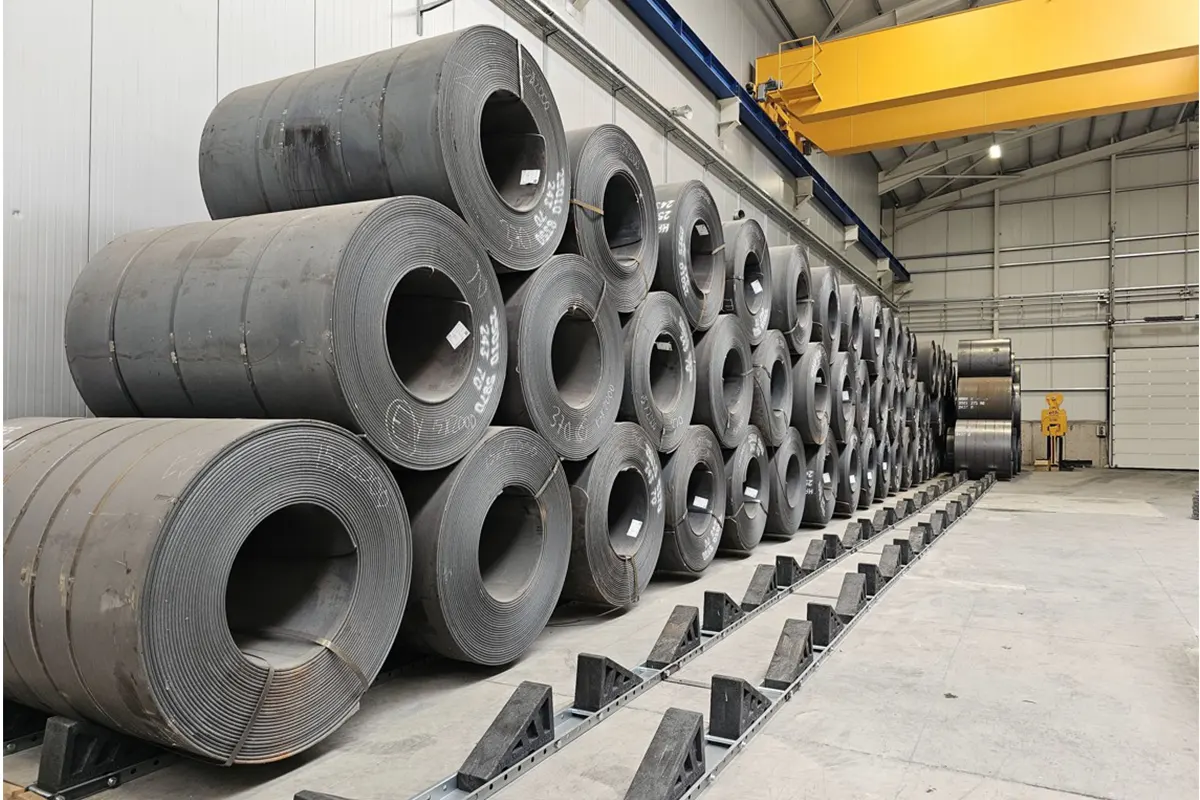
Steel coil stacking systems are engineered solutions designed to store coils safely in controlled and stable configurations, either at single or multiple levels. These systems use precisely manufactured supports that distribute loads evenly and prevent uncontrolled movement.
Key Advantages Over Floor Storage
- Engineered load distribution
- Enhanced worker safety
- Improved space efficiency
- Consistent and repeatable storage layout
For a deeper technical explanation of how stacking systems work, see the detailed overview in
👉 Roll Steel Coil Stacking Systems for Safe and Efficient Industrial Storage
Safety Comparison: Stacking Systems vs. Floor Storage
Risk Factors in Traditional Floor Storage
- Coils can shift or roll during handling
- Unstable positioning increases accident risk
- Manual adjustments expose workers to hazards
Even with safety procedures in place, floor storage remains highly dependent on operator skill and constant supervision.
Safety Performance of Coil Stacking Systems
Steel coil stacking systems are designed to:
- Physically prevent coil movement
- Maintain stable positioning under heavy loads
- Reduce reliance on manual intervention
As a result, facilities using stacking systems typically experience fewer handling incidents and lower safety-related downtime.
Space Utilization and Warehouse Efficiency
Floor Storage Space Limitations
Floor-based storage generally restricts coils to single-level placement. This leads to:
- Large storage footprints
- Longer travel distances for handling equipment
- Inefficient warehouse layouts
Vertical Optimization with Stacking Systems
Steel coil stacking systems allow:
- Multi-level storage configurations
- Higher storage density per square meter
- Better-defined storage zones
This vertical optimization is especially valuable in facilities where expanding warehouse space is not feasible.
Cost Analysis: Short-Term vs. Long-Term Perspective
Initial Cost Perception
Traditional floor storage appears less expensive initially because it requires minimal infrastructure investment. However, this perspective often ignores long-term operational costs.
Long-Term Cost Considerations
Steel coil stacking systems help reduce:
- Coil damage and material loss
- Maintenance and repair expenses
- Insurance and accident-related costs
Over time, these savings can outweigh the initial investment, making stacking systems a more cost-effective solution in the long run.
Operational Flexibility and Scalability
Challenges with Floor Storage
- Difficult to standardize layouts
- Limited adaptability to different coil sizes
- Inefficient expansion options
Scalable Design of Stacking Systems
Modern steel coil stacking systems are modular and adaptable, allowing facilities to:
- Scale storage capacity gradually
- Adjust configurations for different coil specifications
- Integrate with cranes, forklifts, or automated handling systems
Which Storage Method Is Right for Your Facility?
The choice between floor storage and stacking systems depends on:
- Coil volume and weight
- Available warehouse space
- Safety priorities
- Long-term operational goals
Facilities aiming for higher safety standards, better space efficiency, and predictable operating costs increasingly favor engineered steel coil stacking systems.
Conclusion
While traditional floor storage methods may still serve small-scale or short-term needs, they fall short in modern industrial environments. Steel coil stacking systems offer a safer, more efficient, and more scalable alternative that aligns with today’s operational and safety expectations.
As steel facilities continue to modernize, engineered stacking solutions are becoming a key component of sustainable and responsible coil storage strategies.