At a Glance
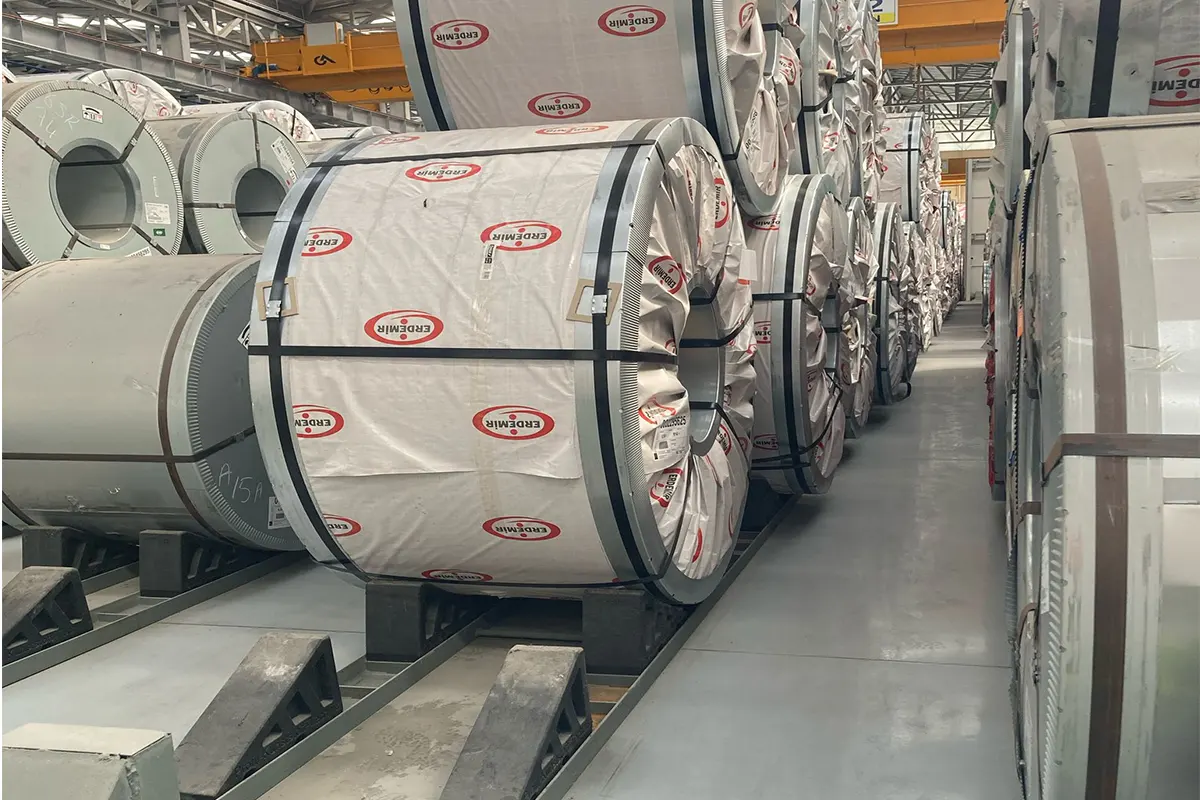
In 2026, the choice between steel and high-performance plastic for coil saddle systems is no longer just about cost—it is a strategic decision impacting warehouse safety, product integrity, and operational ROI. Steel provides the ultimate load-bearing strength for heavy-duty applications, while industrial plastic offers unrivaled surface protection for sensitive metals. This guide analyzes which material fits your specific industrial needs based on modern engineering standards.
Why Material Choice Defines Modern Coil Storage
To understand the shift in 2026 storage standards, we must look at the 5W1H of material engineering in coil supports:
- Who: Industrial facilities, metal service centers, and automated warehouses.
- What: The selection between structural steel and high-performance industrial plastic.
- Where: At the critical contact point where the heavy coil meets the storage system.
- When: During the design and scaling phase of a safe coil storage system.
- Why: To eliminate “flat spots,” prevent workplace accidents, and ensure 20+ years of equipment durability.
- How: By calculating load-to-surface-area ratios and material elasticity.
Steel Coil Saddles: The Backbone of Heavy Industry
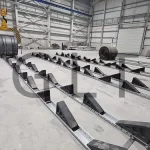
Steel coil saddles remain the industry standard for high-tonnage environments. Engineered from high-grade structural steel, these supports are designed for absolute stability.
1. Unmatched Load Capacity
For coils weighing between 30 to 45+ tons, steel is non-negotiable. Its high tensile strength ensures that the saddle remains undeformed even under static loads for extended periods.
2. Durability in Harsh Environments
Steel is resistant to extreme temperatures and mechanical impacts common in hot-rolling mills. When precision-welded, these saddles become a permanent part of the warehouse infrastructure.
3. Customization and Integration
Steel allows for complex geometric modifications. This makes them ideal for integration into automated storage and retrieval systems (AS/RS) where robotic handling requires millimetric precision.
High-Performance Plastic Saddles: The Precision Protector
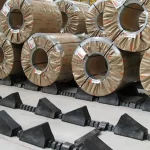
As global demand for high-value finished metals rises, high-performance plastic coil saddles have emerged as a superior alternative for surface-sensitive materials.
1. Advanced Surface Integrity
Unlike metal-to-metal contact, industrial plastic provides a “cushioning effect.” This prevents scratches, oil-film disruptions, and the dreaded “flat spots” on sensitive aluminum, galvanized, or pre-painted steel coils.
2. Corrosion and Moisture Resistance
One of the hidden risks in metal logistics is moisture-induced corrosion. High-performance plastic is non-absorbent and chemically inert, ensuring that no moisture is trapped between the saddle and the coil surface.
3. Noise and Vibration Dampening
In modern, fast-paced facilities, plastic saddles absorb the vibrations from overhead cranes and heavy machinery, contributing to a quieter and safer working environment.
Comparative Analysis: Steel vs. Plastic
Feature | Steel Coil Saddles | High-Performance Plastic |
Max Load Capacity | Exceptional (Up to 50+ Tons) | High (Up to 25-30 Tons) |
Surface Protection | Requires additional padding | Built-in (Superior) |
Maintenance | Low (Corrosion checks needed) | Zero Maintenance |
Lifespan | Decades (Structural) | Excellent (Wear-resistant) |
Ideal For | Heavy Hot-Rolled Steel | Sensitive/Finished Metals |
Strategic Insight: For a comprehensive look at how these materials integrate into a full-scale facility, see our main guide on Coil Saddle Solutions for Safe and Efficient Coil Storage.
2026 Decision Matrix: Which Material Is Right for You?
Selecting the right material is a balance of Product Type and Turnover Frequency.
- Choose Steel if: Your facility handles heavy raw materials, stocks coils for long durations, or uses heavy-duty automated systems where structural rigidity is the priority.
- Choose High-Performance Plastic if: You operate a metal service center dealing with coated or thin-gauge materials where even a minor surface defect results in a rejected order.
Conclusion: The Future is Hybrid
In 2026, many leading manufacturers are adopting a hybrid storage strategy. By utilizing steel saddles for heavy base stocks and high-performance plastic saddles for finished goods, they optimize both cost and quality.
At GLT Engineering, we specialize in designing custom coil saddle systems tailored to your specific material requirements, ensuring that your storage infrastructure is a competitive advantage, not just a necessity.