Modern metal processing facilities operate under increasing pressure: higher production capacity, stricter safety regulations, and limited floor space. These challenges make coils on skids an essential method for safe, stable, and efficient coil storage. From steel and aluminum to copper mills, storing coils on skids enhances operational safety, protects valuable materials, and optimizes warehouse layout — all while reducing the risk of accidents during handling and transport.
As a leading European manufacturer serving customers across Europe, Asia, the Middle East, and Africa, GLT engineers advanced Coil Storage System solutions designed to help mills handle growing industrial demands. This article explores where and how coils on skids are used, why this method is becoming the industry standard, and how GLT’s engineered systems improve safety and productivity for global metal producers.
What Are Coils on Skids?
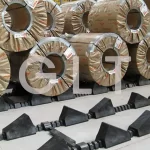
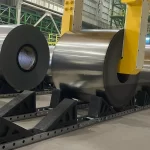
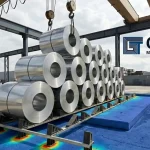
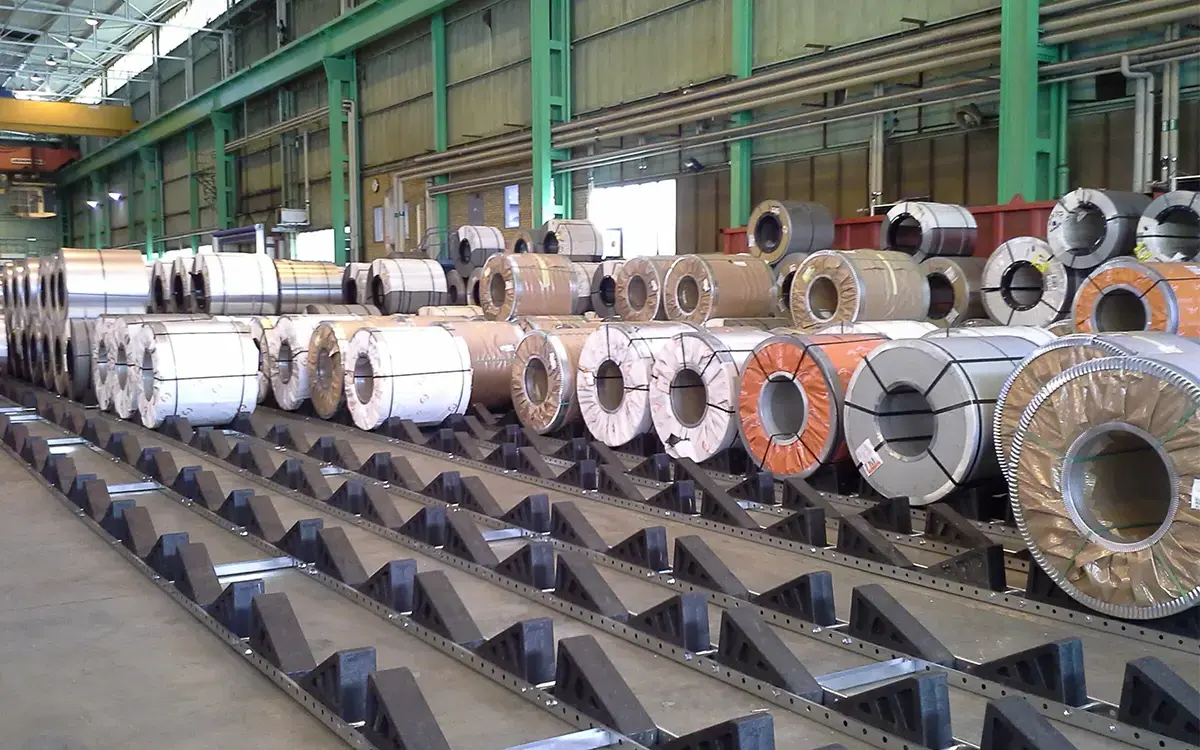
“Coils on skids” refers to metal coils stored on engineered support bases (skids) made of steel, hardwood, or specialized composite materials. These skids distribute coil weight evenly and prevent rolling, accidental shifting, and floor damage. They act as a stable interface between the coil and the warehouse floor — or between the coil and an advanced coil racking system.
Skids are typically used for coils weighing between 5 to 35 tons, depending on the mill’s requirements. Because they are modular and portable, they integrate easily into automated storage systems, crane handling operations, and forklift-based logistics.
Why Metal Producers Prefer Coils on Skids
Across steel, aluminum, and copper industries, storing coils on skids offers several technical advantages:
1. Improved Handling Safety
A coil placed directly on the floor can roll, tilt, or shift — especially during crane lifting. Skids eliminate this risk by fixing the coil in a stable position.
2. Protection Against Surface Damage
Coils with sensitive surfaces (aluminum and copper especially) are easily scratched. Skids prevent contact with dust, moisture, and rough floor surfaces.
3. Faster and More Controlled Movement
Forklifts, coil lifters, and C-hooks can position themselves more easily around skid-mounted coils.
4. Higher Space Efficiency
Coils stored on skids align better and can be organized by diameter, width, or material type. This allows warehouse managers to increase capacity by 20–30% compared to floor stacking.
5. Perfect Compatibility with GLT’s Coil Storage System
GLT designs its Coil Storage System to integrate both skid-mounted coils and pallet-free systems, enabling mills to choose the safest and most efficient configuration for their material flow.
Applications of Coils on Skids in Steel Mills
Steel mills rely heavily on coils weighing between 10 and 30 tons, often stored for short periods before being transferred to slitting or galvanizing lines. Coils on skids provide essential stability in these environments.
Common applications include:
- Hot-rolled and cold-rolled coil storage
- Slitting line buffer zones
- Pickling line staging areas
- Galvanizing and coating preparation zones
- Finished goods warehouses
Skids prevent damage caused by steel coils’ high density and high surface pressure. They also reduce the risk of injuries when operators move coils with cranes.
GLT’s engineered racks, combined with skid-mounted coils, form a safe coil handling solution that minimizes downtime and increases efficiency for steel producers worldwide.
Applications of Coils on Skids in Aluminum Mills
Aluminum coils are lighter but significantly more fragile than steel. Their surfaces must remain flawless for automotive, aerospace, and architectural applications.
Why aluminum producers prefer coils on skids:
- They prevent surface scratches and indentation
- They allow coils to be wrapped and stored without deformation
- They reduce contamination from dust and warehouse debris
- They integrate seamlessly into precision-driven production lines
Aluminum mills frequently combine skids with GLT Coil Storage Systems to ensure both safety and consistent product quality.
Applications of Coils on Skids in Copper Mills
Copper coils are extremely valuable and require high-quality protective storage. Copper is soft, and even small impacts cause dents or surface marks that downgrade the product.
Skids solve several copper-specific challenges:
- Reduce risk of surface contamination
- Prevent oxidation caused by moisture on floors
- Allow safe long-term or short-term storage
- Facilitate precise crane-lifting needed for softer materials
Copper coils are often stored in high-density warehouses, where GLT’s coil racking solutions and skid systems enable safe stacking without compromising coil geometry.
How Coils on Skids Enhance Warehouse Efficiency
1. Faster Logistics Flow
Skids create consistent centerline alignment, allowing operators to predict where hooks and lifting tools should be positioned.
2. Reduced Downtime
Since skid-mounted coils are already elevated, forklifts and coil lifters can approach them without additional adjustments.
3. Better Floor Utilization
Factories using skids report up to 30% improved space efficiency, especially when skids are combined with:
- Coil cradles
- Modular racks
- GLT-engineered heavy-duty storage blocks
4. Compatibility With Automated Storage Systems
AI-assisted warehouse systems and automated cranes require precise coil positions — something skids naturally provide.
Why Coils on Skids Are Becoming Standard in Smart Factories
AI-driven logistics, digital twin simulations, and Industry 4.0 all demand consistency. Skid-mounted coils create predictable coil geometry and consistent coordinates, making them ideal for automation.
Additionally:
- Skids reduce irregularities in coil placement
- They enable robotic coil scanning
- They support RFID and torque monitoring systems
- They increase traceability in digital warehouse platforms
This explains why searches for “coils on skids” are growing in China, Japan, Germany, and the USA — regions with advanced manufacturing ecosystems.
How GLT Supports Global Mills With Advanced Coil Storage Solutions
As a European manufacturer specializing in coil storage and handling systems, GLT works with steel, aluminum, and copper mills worldwide. Every solution GLT provides is engineered to combine:
- Safety
- Durability
- High load capacity
- Efficient floor usage
- Long-term cost savings
GLT’s Coil Storage System integrates perfectly with skid-mounted coil storage, helping mills standardize operations and comply with global safety norms.
Features of GLT’s engineered storage solutions include:
- Heavy-duty welded steel construction
- FEM-based engineering
- Ability to store coils from 5 to 35 tons
- Modular structures adaptable to factory layout
- Europe-based manufacturing with global shipment capability
All systems are designed for integration with existing skid workflows — or for upgrading old skid systems to modern standards.
Best Practices for Using Coils on Skids in Industrial Warehouses
1. Choose the correct skid material
- Steel skids for heavy-duty loads
- Composite skids for corrosion-sensitive materials
- Hardwood skids for surface-sensitive coils
2. Follow standardized placement
GLT recommends consistent coil alignment and center marking for safe crane lifting.
3. Use skids only on stable industrial floors
Uneven floors can compromise coil stability.
4. Combine skids with engineered racking
This increases vertical storage capacity without risking deformation.
5. Regularly inspect skids
Damaged skids must be replaced immediately to maintain coil safety.
Conclusion: Coils on Skids Are a Critical Part of Modern Coil Storage Strategy
From steel to aluminum and copper mills, coils on skids play a central role in safe, efficient, and damage-free coil storage. As industries adopt advanced automation and global safety standards, skid-based storage becomes even more essential.
With engineered solutions manufactured in Europe and delivered worldwide, GLT provides the complete infrastructure needed to store, protect, and handle coils with maximum safety.
For mills seeking advanced storage optimization, GLT’s Coil Storage System, combined with skid-mounted coil strategies, offers a proven path to improved performance, lower operational risks, and long-term durability.