Why Engineered Coil Saddles Deliver Long-Term Cost Efficiency in 2026
In industrial coil storage, cost efficiency is often misunderstood as initial purchase price. By 2026, forward-thinking manufacturers evaluate storage investments based on total cost of ownership (TCO)—a comprehensive measure that includes safety, maintenance, downtime, product damage, and operational continuity.
At the center of this evaluation lies the coil saddle system, a structural element that directly influences both operational risk and long-term financial performance.
Understanding Total Cost of Ownership in Coil Storage
Total cost of ownership extends far beyond upfront investment. In coil storage environments, TCO typically includes:
- Coil damage and surface defect losses
- Workplace accidents and safety-related expenses
- Maintenance and repair costs
- Equipment downtime and production delays
- Insurance premiums and compliance costs
Improper coil support significantly increases each of these cost factors.
How Coil Saddle Systems Reduce Hidden Costs
1. Prevention of Coil Damage
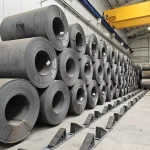
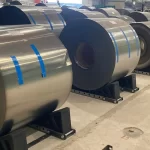
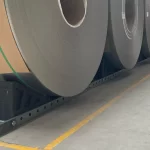
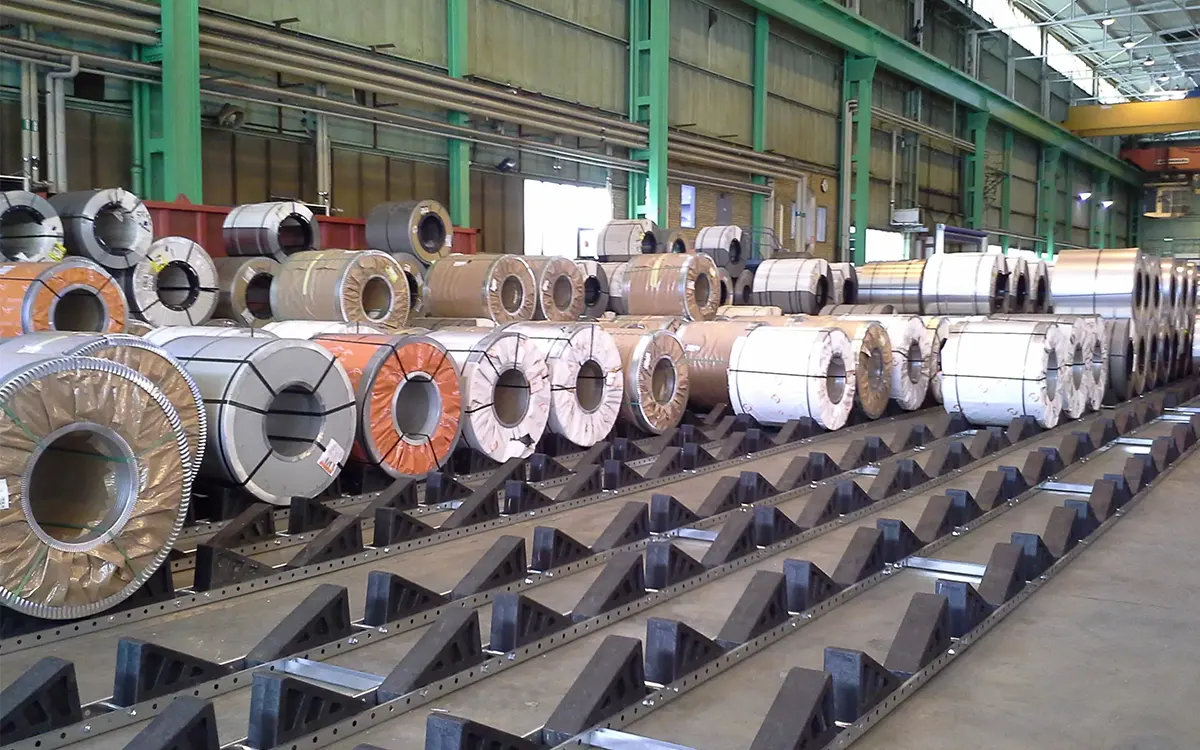
Surface damage is one of the most expensive hidden costs in coil storage. Engineered coil saddle systems prevent metal-to-floor contact and distribute load evenly, reducing deformation and surface defects.
Over time, this translates into fewer rejected coils and lower reprocessing costs.
2. Reduced Accident-Related Expenses
Workplace accidents result in direct medical costs and indirect financial losses such as downtime, legal exposure, and insurance increases. By stabilizing coils and reducing roll-over risks, coil saddle systems lower the probability of costly incidents.
Safety investment becomes a measurable financial advantage.
3. Lower Maintenance and Replacement Costs
Improvised supports and flat-floor storage lead to uneven wear and frequent repairs. Coil saddle systems are designed for long service life under continuous heavy-duty operation, minimizing replacement frequency and maintenance intervention.
Operational Efficiency and Downtime Reduction
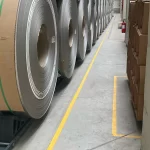
Stable coil positioning improves handling speed and reduces errors during crane or forklift operations. Fewer handling mistakes mean:
- Less unplanned downtime
- Higher throughput
- More predictable production scheduling
By 2026, these operational efficiencies are essential for maintaining competitiveness in global markets.
ROI Perspective: Coil Saddles as Strategic Assets
When evaluated over their lifecycle, engineered coil saddle systems deliver strong return on investment by:
✔ Protecting product quality
✔ Reducing safety risks
✔ Improving operational uptime
✔ Supporting automation readiness
✔ Enhancing compliance and audit performance
Rather than a cost center, the coil saddle becomes a strategic infrastructure asset.
Why TCO-Driven Facilities Choose Engineered Coil Saddle Systems
Facilities that prioritize total cost of ownership recognize that long-term reliability, safety, and performance outweigh short-term savings. Coil saddle systems align with this mindset by delivering predictable performance over decades of operation.
In 2026 and beyond, this approach defines industry leaders.
Conclusion: Lower Costs Begin with Better Coil Support
True cost efficiency in coil storage starts at the foundation. By reducing damage, accidents, maintenance, and downtime, coil saddle systems significantly lower total cost of ownership while improving operational resilience. 👉 Learn how engineered coil saddle systems form the foundation of a safe, efficient, and cost-effective storage strategy:
Coil Saddle Solutions for Safe and Efficient Coil Storage Systems