In the global non-ferrous metal industry, where material value is high and surface tolerance is razor-thin, traditional storage methods often fall short. Unlike carbon steel, aluminum, copper, and brass coils are highly susceptible to mechanical damage, pressure marking, and atmospheric oxidation.
For facilities handling these premium materials, transitioning to specialized coil storage blocks is a strategic requirement for maintaining uncompromising quality standards.
Modern Industry Insights: Specialized Handling for
Sensitive Alloys
Aluminum and non-ferrous coil handling requires advanced storage solutions to prevent pressure marking and surface deformation caused by the material’s lower yield strength. Utilizing engineered polymer storage blocks instead of traditional timber or hard rubber ensures even weight distribution and chemical neutrality. These systems are critical for maintaining the high-quality surface finish demanded by the electronics, aerospace, and high-end automotive sectors.
The Vulnerability of Non-Ferrous Surfaces
The primary challenge with aluminum and copper coils is their low Shore hardness. When stored on narrow or hard contact points, the sheer weight of the coil causes “point loading,” leading to permanent indentations in the outer layers.
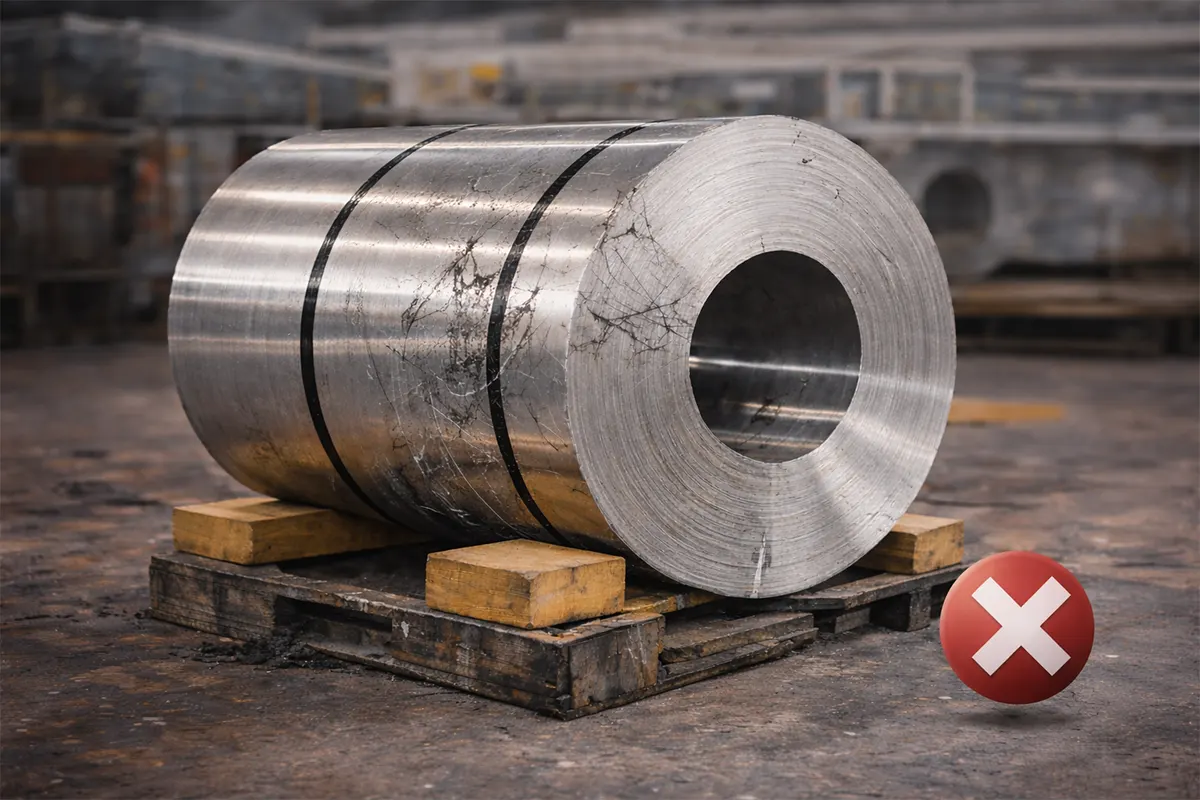
- Pressure Marks: Traditional wooden supports create localized stress points that damage the critical outer windings.
- Chemical Contamination: Non-engineered materials can harbor moisture or acids that react with non-ferrous surfaces, leading to oxidation or staining.
- Coil Stability: Due to their smooth surface finishes, non-ferrous coils have lower friction coefficients, making them prone to shifting during warehouse operations.
Engineering Solutions for Delicate Metals
A modern approach to engineered coil support solutions focuses on material science to mitigate operational risks:
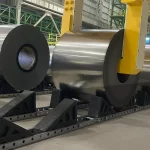
- Optimized Contact Area: Storage blocks are designed to cradle the coil, maximizing the contact surface to keep the pressure well below the material’s deformation threshold.
- Soft-Touch Polymers: Specialized polymer blends offer high load-bearing capacity while remaining gentle enough for the most sensitive aluminum alloys.
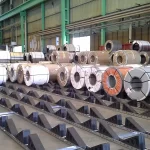
- Modular Stability: Precision rail systems ensure that blocks remain perfectly parallel, preventing edge damage and ensuring total load stability.
Case Study: Zero-Defect Logistics in Copper Processing
A leading copper foil manufacturer for the global electronics industry was experiencing significant material loss due to edge damage and pressure marks from legacy storage methods.
- The Problem: High-value copper coils were being rejected by downstream manufacturers due to surface imperfections that occurred during storage.
- The Solution: Implementation of a customized non-ferrous handling system featuring wide-radius engineered polymer blocks.
- The Result: Surface-related rejections dropped to zero within the first quarter. The facility achieved a full ROI within months purely through the elimination of material waste and re-processing costs.
FAQ: Optimizing Non-Ferrous Storage
Why is wood storage unsuitable for aluminum coils?
Wood is porous and can retain moisture or acidic sap, which causes chemical staining on aluminum surfaces. Furthermore, wood does not provide the uniform weight distribution needed to prevent flat spots on soft alloys.
How does polymer hardness affect coil quality?
Engineered polymers are selected based on the specific yield strength of the metal. The goal is to provide a “supportive cradle” that is firm enough to hold 20+ tons but flexible enough to prevent surface indentation.
Can these systems be used for automated warehouses?
Yes. Modern modular block systems are designed for sub-centimeter precision, making them fully compatible with automated overhead cranes and smart tracking systems.
Conclusion: A Commitment to Material Excellence
Handling aluminum and non-ferrous metals is a delicate balance of power and precision. By investing in next-generation handling systems, you protect not just the metal, but your reputation as a high-quality supplier in the global market.
To see how these principles apply to your specific material type, explore our comprehensive metal warehousing safety standards and technical material compatibility charts.
Protect Your High-Value Inventory
Is your current storage method causing hidden material loss? Contact our engineering team for a surface integrity audit and a customized technical proposal.