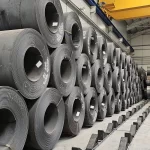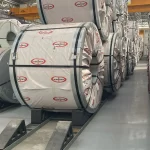
As the metal processing and logistics industries prepare for 2027, warehouse efficiency, workplace safety standards, and material protection have become top priorities. For decades, steel service centers and automotive stamping plants relied on traditional wooden chocks (timber wedges) to store heavy metal coils. However, modern modular coil storage systems—engineered with high-strength steel rails and composite polymer blocks—are rapidly replacing timber setups across global facilities.
Here is a detailed comparison of traditional wooden chocks and modern coil storage systems to help facility managers make the right investment for 2027 and beyond.
1. Workplace Safety and Load Stability
- Wooden Chocks: Timber is an organic material with inconsistent grain density. Under heavy loads (20 to 100 tons), wooden wedges can split, crack, or shift unexpectedly—especially when exposed to humidity, oil, or temperature fluctuations. Furthermore, wooden blocks lack interlocking mechanisms, increasing the risk of coil roll-away accidents.
- Modular Coil Storage Systems: Systems like GLT Muhendislik’s CoilBlock use bolted galvanized steel rails paired with TÜV-certified composite polymer saddles and rollstops. Because the blocks lock directly into perforated rails, the structure eliminates lateral shifting and safely supports multi-tier stacking up to 100 tons.
2. Coil Surface and Edge Protection
- Wooden Chocks: Wood absorbs moisture, grease, and metal shavings from the warehouse floor. Over time, trapped debris acts like sandpaper against sensitive cold-rolled, galvanized, or aluminum coil surfaces, causing scratches, dents, and edge deformation. Moisture retained in timber can also trigger localized corrosion on steel coils.
- Modular Coil Storage Systems: Engineered polymer saddles and anti-slip pads are non-porous and resistant to industrial oils and moisture. Their contoured geometry distributes weight evenly across the coil’s outer diameter, preventing pressure-point damage and reducing costly material scrap.
3. Warehouse Space Optimization (Multi-Tier Stacking)
- Wooden Chocks: Due to structural unpredictability, wooden wedges are generally limited to single-level floor storage. Expanding inventory requires significantly more floor space.
- Modular Coil Storage Systems: Precision-engineered rail-and-saddle systems enable safe two- and three-tier pyramid stacking. By utilizing vertical space, facilities can reduce their required storage footprint by up to 60% without expanding warehouse square footage.
4. Long-Term Cost and Durability (2027 ROI)
- Wooden Chocks: While timber appears inexpensive upfront, wooden wedges degrade quickly under heavy forklift and crane operations. Facilities must continuously repurchase, replace, and dispose of splintered wood—creating recurring operational costs and waste.
- Modular Coil Storage Systems: Built from heavy-duty steel channels and wear-resistant composite polymers, modular systems require virtually zero maintenance and last for years. Additionally, the rails and blocks can be easily unbolted, reconfigured for different coil diameters, or relocated to another facility.
Side-by-Side Comparison: 2027 Industrial Standards
Feature | Traditional Wooden Chocks | Modular Coil Storage System |
Load Capacity | Limited & inconsistent (risk of splitting) | Up to 100 tons (certified multi-tier) |
Safety Compliance | Often fails strict ISO / TÜV audits | TÜV-certified interlocking design |
Surface Protection | High risk of scratches, dents & moisture | Zero pressure-point or moisture damage |
Space Efficiency | Single-layer storage only | Up to 60% space savings via 3-tier stacking |
Lifespan & Maintenance | Short lifespan; frequent replacement | Long-term durability; minimal maintenance |
Flexibility | Fixed / manual placement | Adjustable spacing for varying coil diameters |
Preparing Your Facility for 2027
In 2027, relying on improvised wooden wedges exposes metal processing facilities to unnecessary safety liabilities, damaged inventory, and wasted floor space. Transitioning to a modular coil storage system not only ensures full compliance with international occupational safety regulations but also delivers immediate gains in storage capacity and operational speed.
Looking to upgrade your warehouse layout before 2027? Contact GLT Muhendislik (info@gltmuhendislik.com) for a customized, turn-key coil storage system tailored to your coil dimensions and tonnage requirements.