Quick Summary
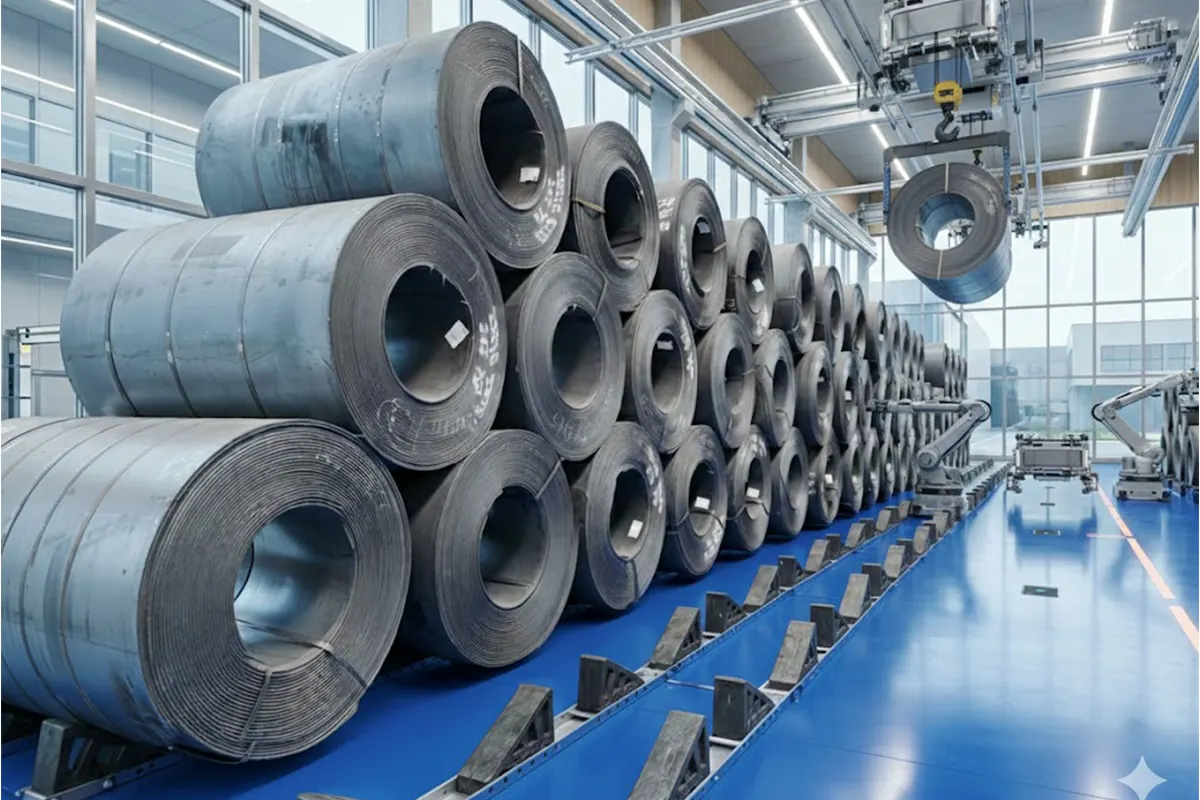
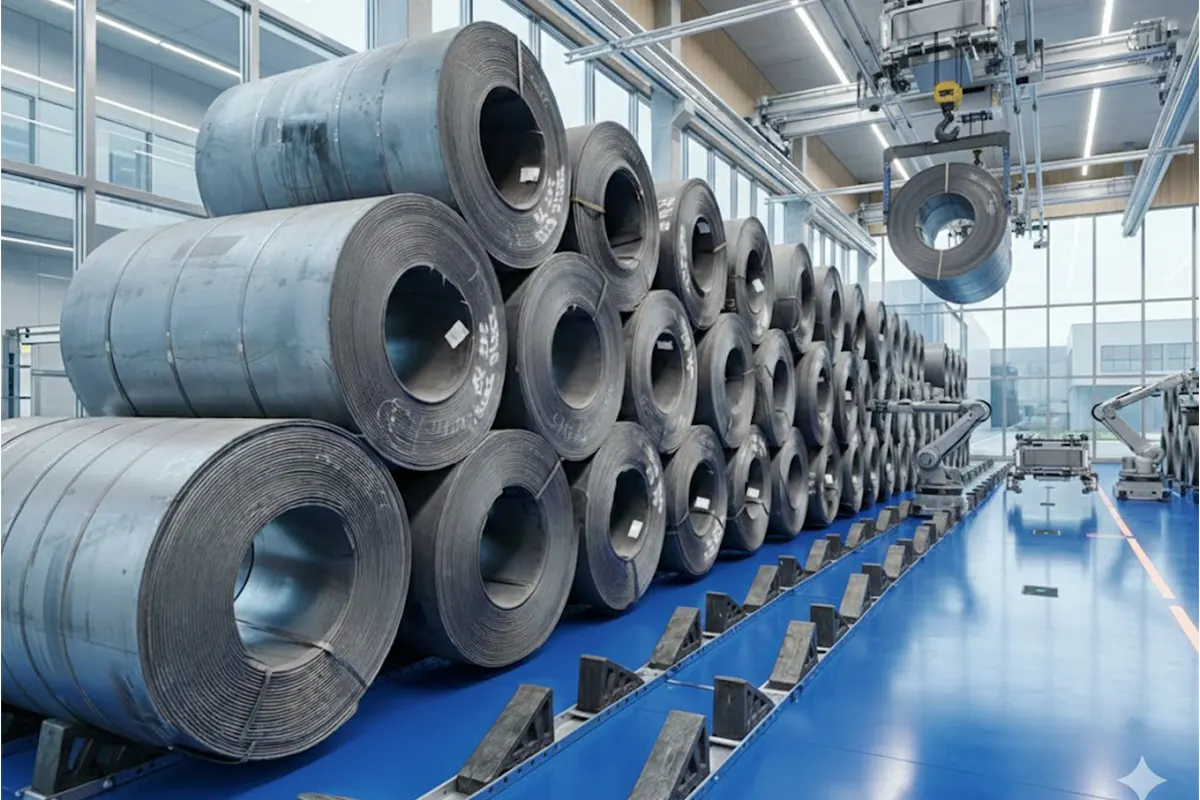
As global logistics shift toward unmanned operations in 2026, the synergy between automated guided vehicles (AGVs) and coil saddle systems has become vital. A truly automated warehouse requires more than just robots; it needs precision-engineered supports that ensure millimetric accuracy during coil placement. This guide explores how GLT’s coil saddle solutions are optimized for seamless integration with C-hooks, cranes, and AGV technology.
The 5W1H of Automated Coil Logistics
- Who: Forward-thinking steel mills and metal service centers transitioning to unmanned operations.
- What: The strategic integration of coil saddles with robotic handling equipment.
- Where: High-density storage areas where precision and speed are paramount.
- When: During the design of “Smart Warehouse” infrastructures or system retrofitting.
- Why: To eliminate human error, increase workflow velocity, and ensure 24/7 operational safety.
- How: Through modular design, sensor compatibility, and precise geometric alignment.
Precision Positioning: Why AGVs Need Engineered Saddles
In a traditional warehouse, a forklift operator can make small adjustments during coil placement. In an automated warehouse, there is no room for error.
- Millimetric Accuracy: Our coil saddle systems are designed with specific lead-in angles and centering guides to help AGVs deposit loads perfectly every time.
- Stability for High-Speed Handling: Automated systems move faster than human-operated ones. A stable, engineered saddle prevents the “rebound effect” during rapid placement.
C-Hook and Overhead Crane Synchronization
The interaction between the lifting tool (C-hook) and the support (Saddle) is a critical engineering junction.
- Clearance Optimization: We design our saddles to provide optimal clearance for C-hooks and automated coil grabs, preventing equipment collisions.
- Load Distribution: Modern automated cranes use sensors to monitor load balance. Our saddles ensure that the weight is distributed exactly as the system expects, preventing “unbalanced load” errors in the software.
Smart Saddles: Preparing for IoT and Sensor Integration
By 2026, the “dumb” steel block is dead. The future is Smart Industrial Storage.
- Sensor Ready: GLT saddles can be equipped with proximity sensors and weight scales that feed real-time data back to the Warehouse Management System (WMS).
- Inventory Tracking: Precision placement allows for better RFID or barcode scanning accuracy, ensuring the WMS knows exactly which coil is on which saddle at all times.
Maximizing ROI Through Automation-Friendly Design
Investing in an automated system is expensive. Using improper or “standard” supports in a high-tech facility is a common mistake that leads to downtime.
- Reduced Downtime: Properly integrated coil saddles mean fewer sensor errors and less mechanical wear on expensive AGVs.
Strategic Note: Automation starts from the ground up. To see the full range of our system-level approach, visit our cornerstone article: Coil Saddle Solutions for Safe and Efficient Coil Storage Systems.
Conclusion: Future-Proofing Your Metal Logistics
As we move deeper into 2026, the gap between traditional warehouses and automated facilities is widening. Integrating your coil saddle system with modern logistics technology is not just an upgrade—it is a requirement for global competitiveness.