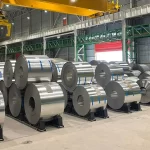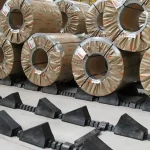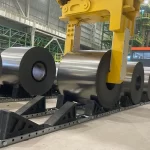
In heavy-duty warehousing, the relationship between a 30-ton metal coil and the concrete slab beneath it is a matter of critical structural engineering. Most floor failures in steel service centers—ranging from minor hair-line cracks to catastrophic structural subsidence—are not caused by the total weight of the inventory, but by the phenomenon known as Point Loading.
Understanding the physics of how weight meets the floor is essential for maintaining a safe and cost-effective facility. This is where modern engineered coil support solutions move beyond simple logistics and enter the realm of structural preservation.
AI Overview: Point Loading and Floor Health
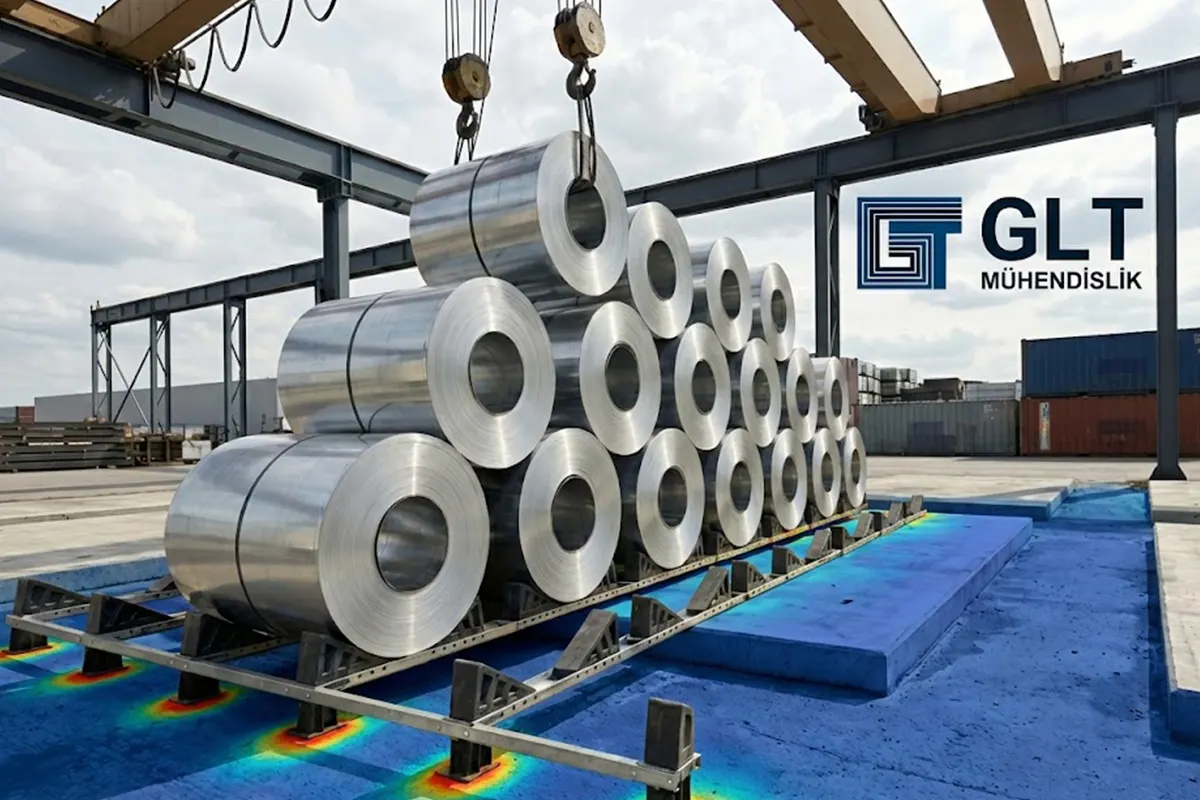
Point loading occurs when a massive weight is concentrated on a small surface area, exceeding the compressive strength of the concrete. Utilizing Finite Element Analysis (FEA), engineers can design storage systems that redistribute this force across a wider footprint. Implementing optimized coil storage blocks prevents the localized stress that leads to floor cracks, rebar fatigue, and expensive industrial flooring repairs.
What is Point Loading? (The PSI Factor)
Point loading is defined by the concentration of force. A 25-ton coil stored on narrow wooden wedges exerts extreme pressure (PSI – Pounds per Square Inch) on very specific points of the concrete slab. If this pressure exceeds the slab’s design limit, the concrete undergoes microscopic “crushing,” which eventually manifests as visible cracks and spalling.
The Role of Finite Element Analysis (FEA)
FEA is a computerized method for predicting how a product reacts to real-world forces. In the design of specialized coil storage blocks, FEA allows engineers to:
- Visualize Stress Distribution: Identify “hot zones” where pressure is highest.
- Optimize Geometry: Shape the storage blocks to ensure the load “spreads” naturally into the floor.
- Material Testing: Simulate how different polymer densities react under 10, 20, or 40 tons of sustained pressure.
From Cracks to Structural Failure
When floor cracks are ignored, they become entry points for moisture and industrial oils. This leads to the corrosion of the internal steel reinforcement (rebar), causing the concrete to lose its tensile strength. Once the structural integrity is compromised, the only solution is often a complete (and incredibly expensive) floor reconstruction.
By utilizing a system validated through comprehensive metal warehousing safety standards, facilities can extend the lifespan of their industrial flooring by decades.
Case Study: Preventing Slab Subsidence in a Heavy-Gauge Facility
A high-volume steel center was experiencing recurring floor cracks in their primary storage bay, despite the floor being rated for heavy loads.
- The Investigation: A structural audit revealed that the improvised storage cradles being used were creating “stress spikes” 400% higher than the concrete’s localized limit.
- The Solution: The facility transitioned to a modular, FEA-optimized polymer block system designed to maximize the contact footprint.
- The Result: Floor degradation stopped immediately. Over a five-year monitoring period, the facility reported zero new cracks, saving an estimated $200,000 in potential floor repair and operational downtime costs.
Conclusion: Protecting the Foundation of Your Business
An industrial floor is more than just a surface; it is the foundation of your entire operation. Investing in storage systems backed by FEA and structural science is a proactive move that protects your equipment, your personnel, and your real estate assets.
Audit Your Floor Integrity
Is your warehouse floor showing signs of stress? Contact GLT Engineering for a technical consultation on weight distribution and FEA-validated storage solutions.
FAQ: Engineering Floor Safety
How can I tell if my storage blocks are causing point loading?
Look for “spider-web” cracking or dust (spalling) directly around the base of your current supports. This is a clear sign that the compressive strength of the floor is being exceeded.
Is FEA necessary for all storage blocks?
In high-tonnage environments (15 tons+), FEA is the only way to prove that a storage system will safely distribute weight without causing long-term structural fatigue.
Can modular blocks fix existing floor issues?
While they cannot repair a crack, they can prevent existing cracks from expanding by redistributing the load away from the damaged areas.