In the high-stakes world of metal processing and automotive manufacturing, the storage of heavy-gauge steel and aluminum coils is often viewed through the lens of operational expense. However, a shift in perspective from “price per unit” to Long-Term Return on Investment (ROI) reveals that high-quality Coil Storage Blocks are a strategic asset rather than a simple consumable.
For procurement managers and plant directors across Europe, the US, and Asia, understanding the financial delta between “cheap alternatives” and “engineered storage solutions” is key to sustainable profitability.
Financial Benefits of Engineered Coil Storage: A Quick Summary
Investing in engineered coil storage blocks offers a superior ROI by eliminating three major costs: material rejection (due to surface deformation), workplace safety liabilities, and frequent replacement expenses associated with low-grade timber. While the initial investment is higher than traditional methods, the 10-year total cost of ownership (TCO) is approximately 40% lower, making it a strategic financial decision for high-volume metal service centers.
The True Cost of “Low-Cost” Storage Alternatives
When evaluating the initial investment of coil storage, many facilities opt for improvised solutions like wood timber or low-grade rubber wedges. While the upfront CAPEX (Capital Expenditure) is minimal, the hidden OPEX (Operating Expenditure) is staggering:
- Surface Damage (Deformation): Improper support leads to “flat spots” or pressure marks on the outer windings. In the automotive industry, a single rejected coil due to surface defects can cost $5,000 to $15,000.
- Safety Risks & Insurance Premiums: Unstable coils are a primary cause of workplace fatalities in warehouses. Non-engineered blocks increase the likelihood of “coil slumping,” leading to higher insurance premiums and potential legal liabilities.
- Frequent Replacement: Low-durability materials degrade under 20-30 ton loads, requiring constant replacement and labor hours for maintenance.
Engineering the ROI: Why Quality Pays Off
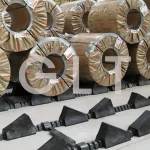
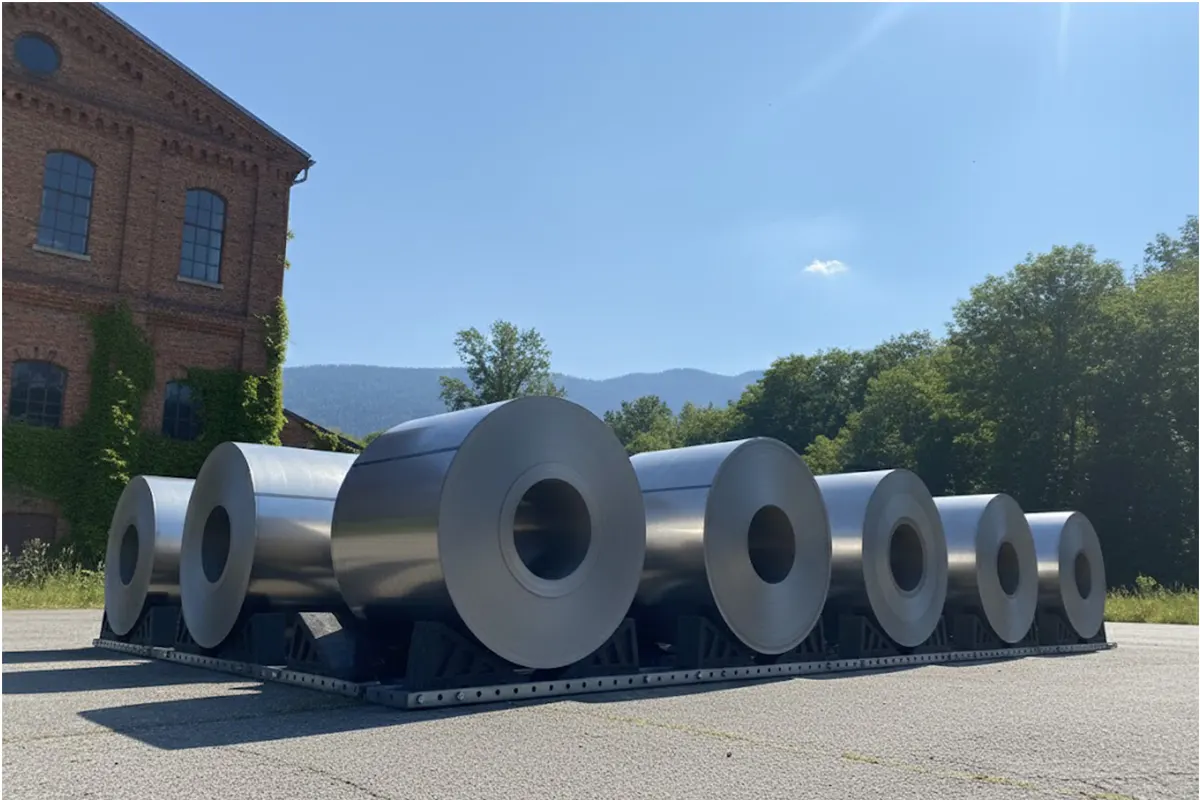
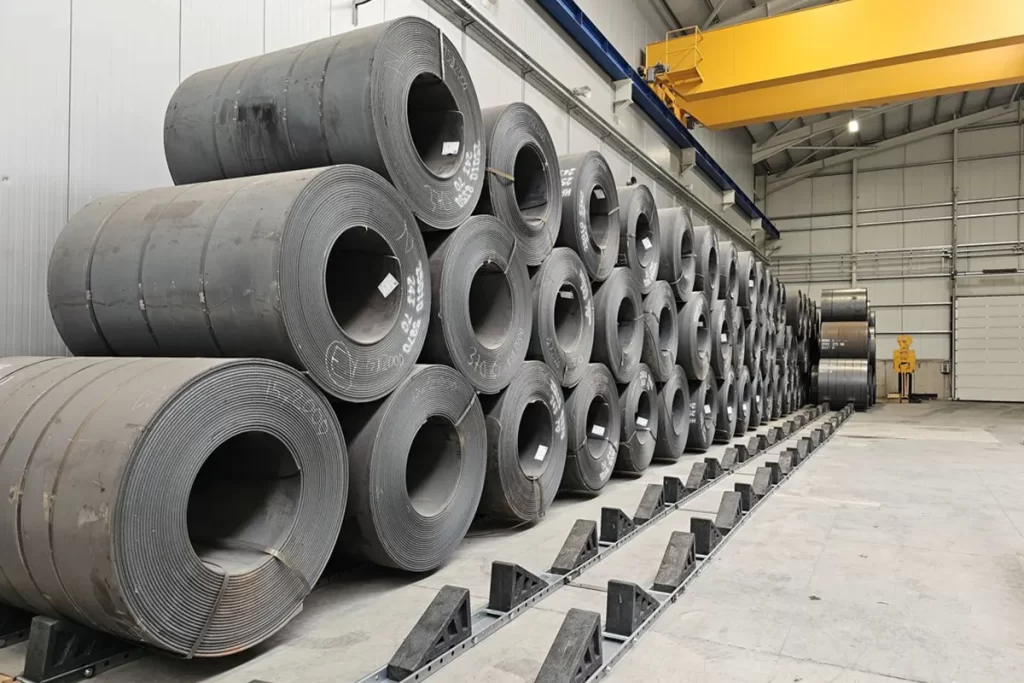
Advanced coil storage blocks, such as those engineered by GLT Engineering, are designed with high-density polymers and specific Shore hardness to distribute weight evenly. Here is how the investment pays back:
1. Zero-Defect Logistics
In a tier-1 automotive service center, precision is non-negotiable. Engineered blocks ensure that the coil remains perfectly circular. By eliminating surface pressure marks, companies can reduce their rejection rate by up to 98%, directly boosting the bottom line.
2. Operational Speed and Efficiency
Interlocking storage systems allow for a “plug-and-play” warehouse layout. Unlike timber, which needs constant adjustment, modular blocks enable faster crane movements and safer stacking, reducing forklift idling time and labor costs.
3. Durability (The 10-Year Horizon)
While a standard wooden block might last six months in a high-turnover environment, an engineered polymer block is designed for a decade of service. When calculated over a 5-to-10-year period, the cost-per-use of high-end storage blocks is approximately 40% lower than traditional methods.
Case Study: Global Automotive Steel Center Transition
A major steel service center in Western Europe recently audited their storage efficiency. They were using traditional timber wedges for 25-ton cold-rolled coils.
- The Problem: They averaged 3 “coil slumping” incidents per year and a 2% rejection rate due to floor-level damage.
- The Solution: Implementation of a comprehensive coil storage system using engineered polymer blocks.
- The Result: In the first 18 months, the rejection rate dropped to near zero. The facility saved an estimated €120,000 in material loss and avoided a potential €50,000 increase in insurance premiums by passing a rigorous safety audit.
2026 Procurement Insights: Selecting the Right System
For industrial decision-makers, the 2026 market demands transparency and technical proof. When requesting a quote, look for:
- Load Distribution Analysis: Can the block withstand 30+ tons without permanent deformation?
- Oil and Chemical Resistance: Will the material degrade if exposed to rolling oils?
- Modularity: Can the system grow with your warehouse capacity?
To fully understand the technical specifications and safety standards required for modern warehousing, refer to our ultimate guide to coil storage blocks, which covers everything from material science to international safety compliance.
Conclusion: Protecting Your Assets
The pricing of coil storage should never be viewed in isolation from the value of the coils being stored. A $50,000 coil deserves more than a $5 piece of wood. Investing in engineered storage is an investment in safety, quality, and long-term financial stability.
Optimize Your Warehouse ROI Today
Are you looking to reduce material rejection rates and improve warehouse safety? Contact our engineering team for a customized cost-benefit analysis and a technical price quote tailored to your facility’s specific load requirements.